A bailment is the act of placing property in the custody and control of another, usually by agreement in which the holder (bailee) is responsible for the safekeeping and return of the property. When a motor vehicle is delivered to and accepted by a garage owner for storage, a bailment for mutual benefit generally results, and the relationship defines the legal relationship of the parties. The garage owner is bound to exercise ordinary care in the safeguarding of the vehicle. This can be modified somewhat by agreement between the parties.
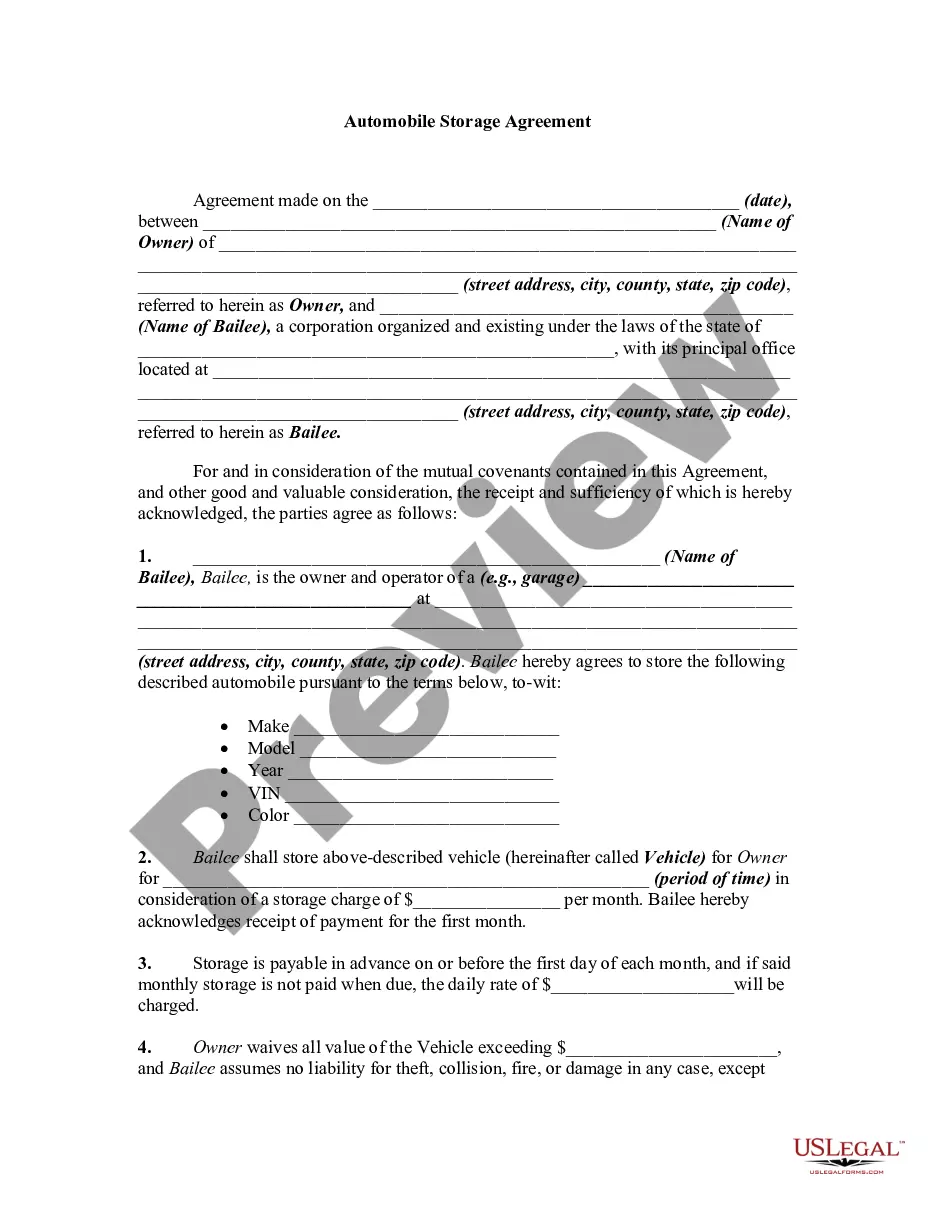
Vehicle storage agreement template with owner is a legally binding document that establishes the terms and conditions between a vehicle owner and the storage facility for storing a vehicle. This agreement ensures that both parties are aware of their rights and responsibilities throughout the duration of the vehicle storage period. The vehicle storage agreement template with owner typically includes the following key elements: 1. Parties Involved: It identifies the vehicle owner, who is also referred to as the "Owner," and the storage facility, referred to as the "Storage Provider" or "Facility." 2. Vehicle Description: This section includes detailed information about the vehicle being stored, including make, model, year, color, VIN (Vehicle Identification Number), registration number, and any specific markings or features. 3. Storage Terms: This outlines the duration of the storage agreement, including the start and end dates. It also covers any renewal or termination provisions. 4. Storage Location: It specifies where the vehicle will be stored, including details about the specific storage unit or parking space. 5. Storage Fees: The agreement defines the charges associated with the vehicle storage, including the payment frequency and acceptable payment methods. It may also mention any late fees or penalties for non-payment. 6. Liability and Insurance: This section highlights the responsibilities of both parties concerning the protection of the vehicle during storage. It outlines whether the owner or the storage facility is responsible for obtaining insurance coverage and mentions any liability waivers or disclaimers. 7. Maintenance and Condition: It may include provisions related to the maintenance and care of the vehicle while in storage. This can cover aspects such as regular inspections, battery maintenance, fluid checks, and any additional services provided by the storage facility. 8. Access and Security: This outlines the guidelines for accessing the stored vehicle, including any security measures such as key card entry, security cameras, or alarm systems. It also defines who can access the vehicle and under what circumstances. There are various types of vehicle storage agreement templates available, which can cater to different scenarios and requirements. Some common variations include: 1. Short-term Vehicle Storage Agreement Template: Designed for vehicle owners who require temporary storage for a specific duration, such as during vacations or home renovations. 2. Long-term Vehicle Storage Agreement Template: Geared towards individuals or businesses that need extended storage for their vehicles for months or even years, such as classic car collectors or military personnel. 3. Indoor Vehicle Storage Agreement Template: Specifically created for storing vehicles in enclosed or climate-controlled storage units to protect them from weather elements and other potential damage. 4. Outdoor Vehicle Storage Agreement Template: Suited for owners who opt for open parking spaces or uncovered storage areas, typically used for temporary storage or when indoor options are unavailable. When choosing a vehicle storage agreement template with owner, it's essential to select the one that aligns with your specific storage needs and provides comprehensive coverage for both parties involved.
Free preview Simple Vehicle Storage Agreement
